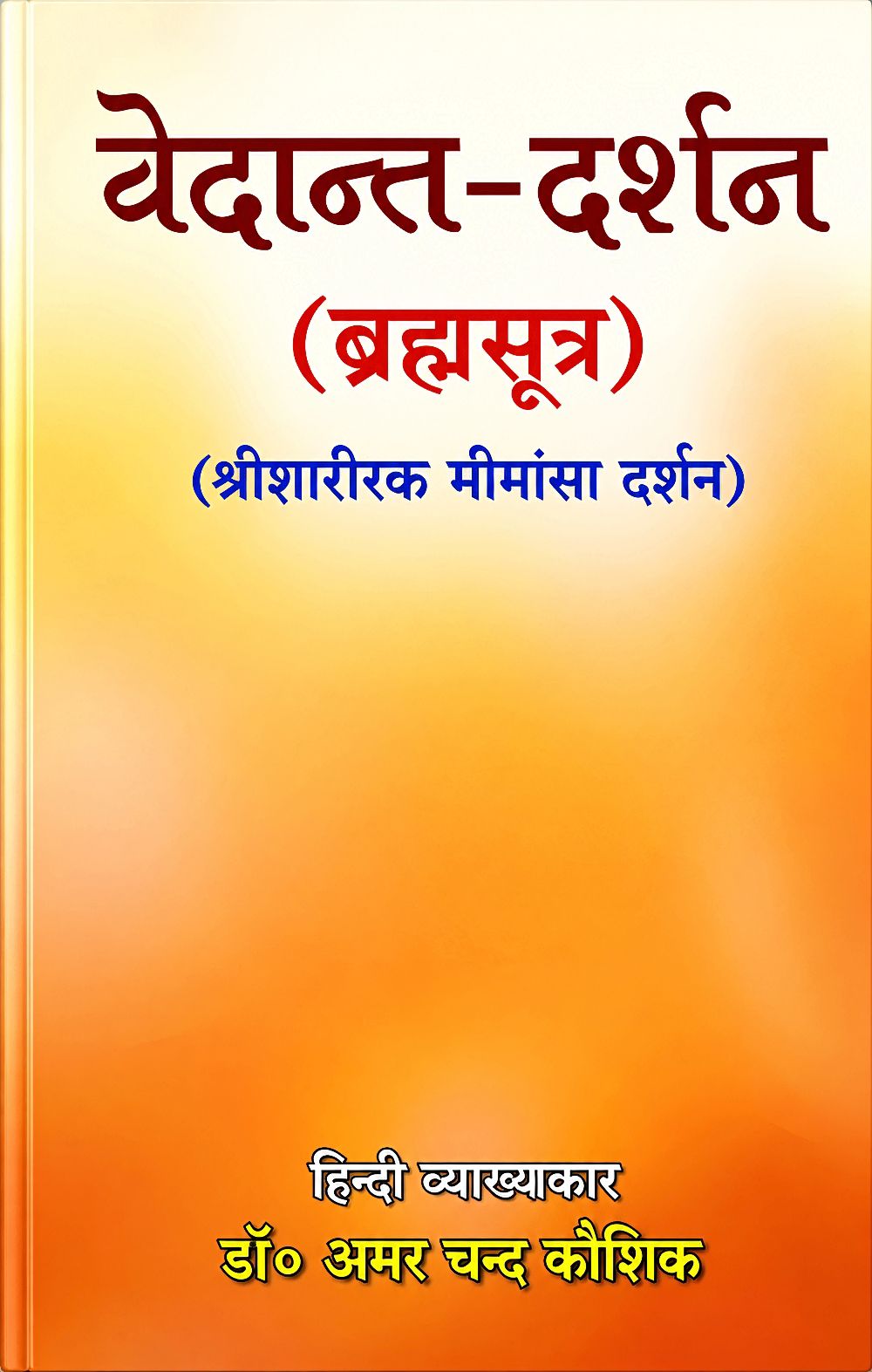
Vedant-Darshan ( Brahmasutra )Shrisharirak Mimamsa Darshan
Amar Chand Kaushik · Parimal Publications
scripture. It holds the highest place among Indian philosophies because it describes the ultimate goal of the soul: attainment of salvation or the desire to meet Brahman (the Supreme Being), and the means to achieve it. This scripture comprehensively describes the nature of Brahman, hence it is also called the "Brahmasutra." This scripture describes the ultimate principle of the Vedas or knowledge, hence it is also called "Vedanta Darshan." The purpose of Vedanta Darshan is to understand the unbroken meaning of the Upanishadic meanings, namely, the unity of Brahman and the Self. Therefore, its other name is "Uttar Mimamsa." It is also known as "Sharirak Mimamsa Darshan" because it also mentions the attainment of Brahman for the embodied soul. This scripture is divided into four chapters and each chapter has four padas, thus a total of sixteen padas. The first chapter shows the mutual agreement of all the Vedanta sentences, hence it is named "Samnvayaadhyaya". The second chapter resolves all kinds of contradictions, hence it is named "Aviroddhaadhyaya". The third chapter describes the ways and means to attain God. Therefore, this chapter is known as "Sadhan Adhyaya". The fourth chapter describes the results of worship etc., hence this chapter is known as "Phala Adhyaya". While numerous scholars have written commentaries and annotations on Vedanta philosophy, the primary objective of this book is to simplify this philosophy and present it to the general reader. The original Sanskrit sutras have been parsed, i.e., separated into sandhi-like fragments, and the meanings of individual words have been explained. Wherever necessary, the interpretation of the sutras has been corroborated by Shruti and Smriti texts.
Buy NowIndia's trusted online book store