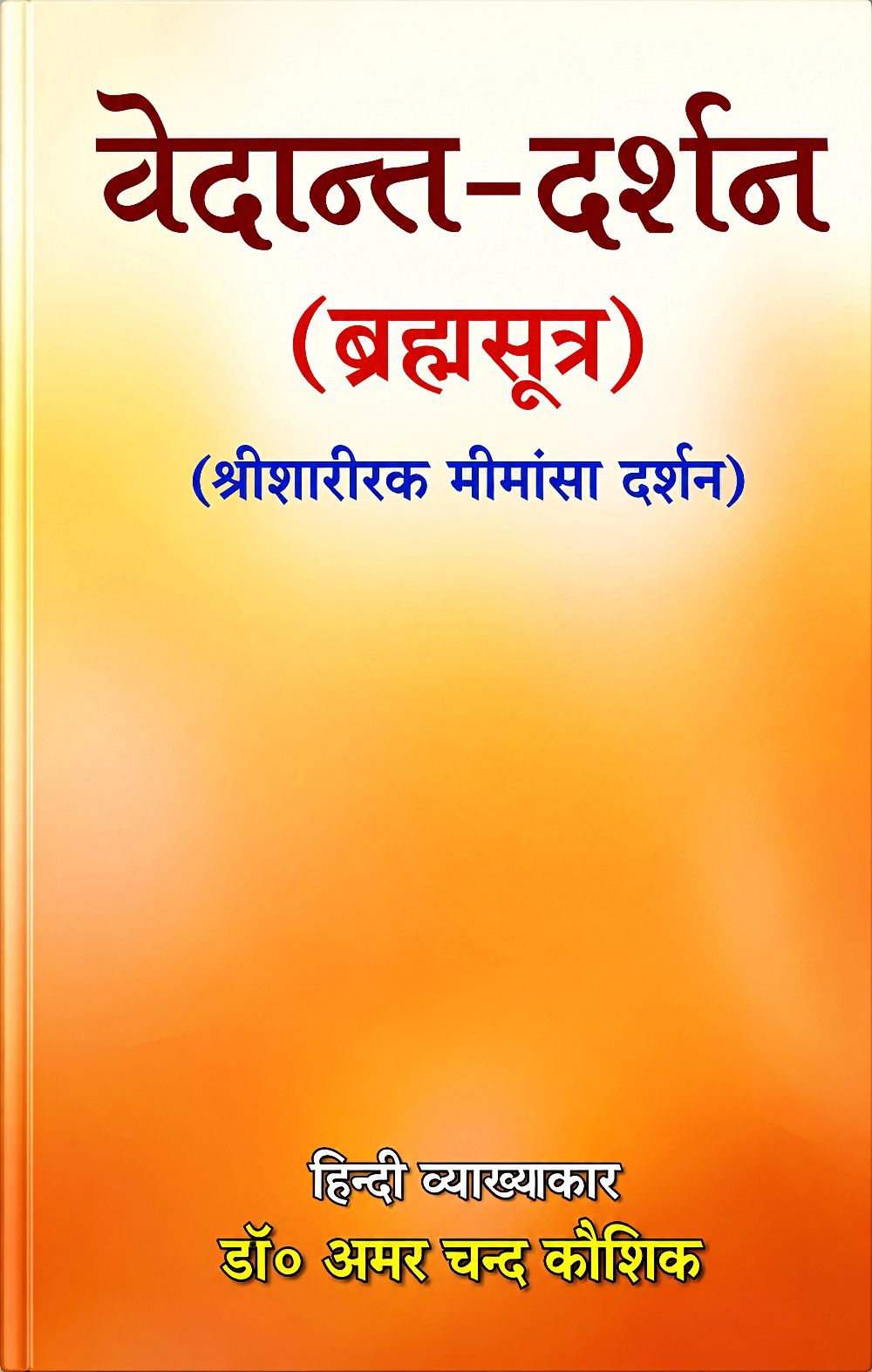
Vedant-Darshan ( Brahmasutra )Shrisharirak Mimamsa Darshan
Amar Chand Kaushik · Parimal Publications
scripture. It holds the highest place among Indian philosophies because it describes the ultimate goal of the soul: attainment of salvation or the desire to meet Brahman (the Supreme Being), and the means to achieve it. This scripture comprehensively describes the nature of Brahman, hence it is also called the "Brahmasutra." This scripture describes the ultimate principle of the Vedas or knowledge, hence it is also called "Vedanta Darshan." The purpose of Vedanta Darshan is to understand the unbroken meaning of the Upanishadic meanings, namely, the unity of Brahman and the Self. Therefore, its other name is "Uttar Mimamsa." It is also known as "Sharirak Mimamsa Darshan" because it also mentions the attainment of Brahman for the embodied soul. This scripture is divided into four chapters and each chapter has four padas, thus a total of sixteen padas. The first chapter shows the mutual agreement of all the Vedanta sentences, hence it is named "Samnvayaadhyaya". The second chapter resolves all kinds of contradictions, hence it is named "Aviroddhaadhyaya". The third chapter describes the ways and means to attain God. Therefore, this chapter is known as "Sadhan Adhyaya". The fourth chapter describes the results of worship etc., hence this chapter is known as "Phala Adhyaya". While numerous scholars have written commentaries and annotations on Vedanta philosophy, the primary objective of this book is to simplify this philosophy and present it to the general reader. The original Sanskrit sutras have been parsed, i.e., separated into sandhi-like fragments, and the meanings of individual words have been explained. Wherever necessary, the interpretation of the sutras has been corroborated by Shruti and Smriti texts.
महर्षि वेदव्यास द्वारा रचित वेदान्तदर्शन एक महान् शास्त्र है। भारतीय दर्शनों में इसका स्थान सबसे ऊँचा है क्योंकि इसमें जीव के परम उद्देश्य अर्थात् मोक्ष प्राप्ति अथवा ब्रह्म (परमात्मा) से साक्षात्कार करने की जिज्ञासा एवं उसे प्राप्त करने के साधन का प्रतिपादन किया गया है। इस शास्त्र में ब्रह्म के स्वरूप का सांगोपांग निरूपण किया गया है, इसलिए इसे 'ब्रह्मसूत्र' भी कहते हैं। यह शास्त्र वेद के अथवा ज्ञान के चरम सिद्धान्त का निरूपण करता है, इसलिए इसे 'वेदान्त-दर्शन' भी कहते हैं। वेदान्त दर्शन का प्रयोजन उपनिषद् वाक्यार्थ निर्णयपूर्वक ब्रह्मजीवैक्यरूप अखण्डार्थ बोध कराना है। अतएव इसका दूसरा नाम 'उत्तरमीमांसा' है। यह 'शारीरक मीमांसा दर्शन' के नाम से भी जाना जाता है, क्योंकि इसमें शरीरधारी जीवात्मा के लिए ब्रह्मप्राप्ति का उल्लेख भी है। यह शास्त्र चार अध्यायों तथा प्रत्येक अध्याय के चार-चार पादों, इस प्रकार कुल सोलह पादों में विभक्त है। पहले अध्याय में सभी वेदान्त वाक्यों का परस्पर अन्वय दिखाया गया है, इसीलिये उसका नाम "समन्वयाध्याय" रखा गया है। दूसरे अध्याय में सब प्रकार के विरोधाभासों का निराकरण किया गया है, इसलिए इसका नाम "अविरोधाध्याय" रखा गया है। तीसरे अध्याय में परमात्मा की प्राप्ति हेतु उपाय व साधनों का वर्णन किया गया है। इसलिए यह अध्याय "साधन अध्याय" के नाम से जाना जाता है। चौथे अध्याय में उपासनादि के फल के विषय में वर्णन किया गया है। इस प्रकार इस अध्याय को "फल अध्याय" के नाम से जाना जाता है। वैसे तो वेदान्त दर्शन पर अनेक विद्वानों ने भाष्य एवं टीकाएँ लिखी है, परन्तु इस पुस्तक का मुख्य उद्देश्य इस 'दर्शनशास्त्र' को सरल बनाकर एक सामान्य (साधारण) पाठक के समक्ष प्रस्तुत करना है। इस पुस्तक में मूल संस्कृत के सूत्रों के साथ उनका पदच्छेद अर्थात् सन्धि विच्छेद किया गया है, तथा अलग अलग शब्दों का अर्थ लिखकर व्याख्या की गई है। सूत्रों की व्याख्या हेतु जहाँ जहाँ आवश्यक समझा गया वहाँ वहाँ श्रुति एवं स्मृति वाक्यों द्वारा पुष्टि की गई है।
| ISBN-10 | 8171108288 |
|---|---|
| Author | Amar Chand Kaushik |
| Publisher | Parimal Publications |
| Language | Sanskrit-Hindi |
| Binding | Hardcover |
| Edition | First |
| Pages | 342 |
| Year | 2023 |
Related books
- Sampooran Veda 9 Vol. Book Set
- Mahabharata Of Vyasa
- Ramayana Of Valmiki
- Agni Maha Puranam
- Maha Samadhi Antardhyana ( Realizing The Absolute )
- Lalita Sahasranama
- Sannyasa:Cultivating Spiritual Awarness
- Sadhana
India's trusted online book store