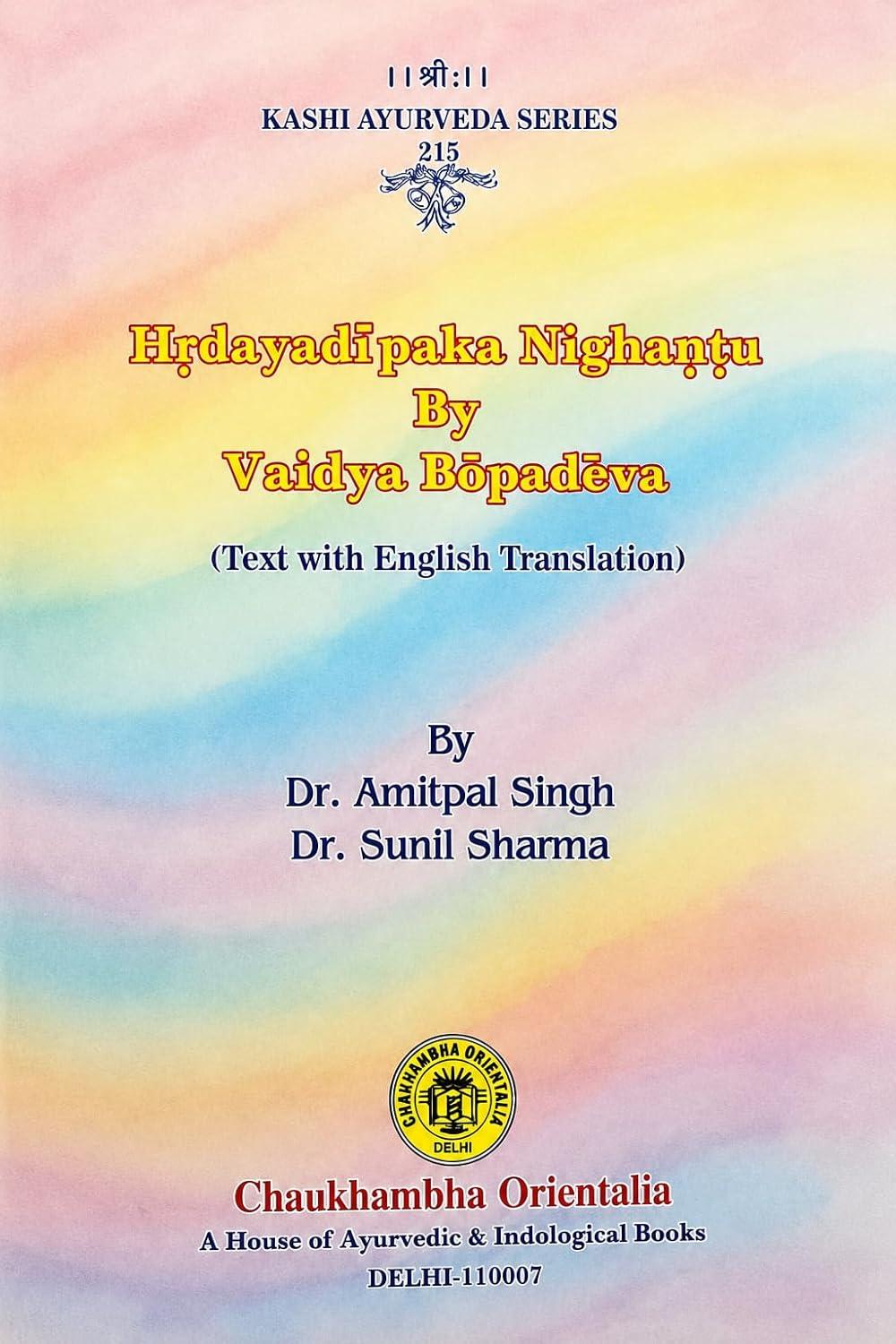
Hrdayadipaka Nighantu of Vaidya Bopadeva | Classical Ayurvedic Materia Medica and Medicinal Plant Lexicon
Dr. Amritpal singh, Dr. Sunil Sharma · Chaukhambha Orientalia Delhi
PREFACE The renowned scholar Bopadeva (son of Keśava) wrote the well-known 13th-century Ayurvedic lexicon (Nighantu), Hrdayadīpaka nighantu. It functions as a thorough glossary of medicinal plants, classifying compounds according to their medicinal uses, traditional synonyms, and therapeutic qualities. In addition to his medical lexicons, Bopadeva, who lived in the 13th-century Yadava kingdom of Devagiri (modern-day Maharashtra), was well-known for his treatise on Sanskrit grammar (Mugdhabodha) and medical writings like the Śataslokī. Key Features of Hrdayadīpaka nighanțu are outlined below: The work is organized into eight sections, or Vargas, in a methodical manner. Metrical Style: It closely resembles the metrical composition style of Mādhava's earlier Paryāyaratnamālā. Drug Entries: To shed light on the use of cryptic plant names in earlier classical texts, the text describes a variety of herbal medicines, including their pharmacological profiles (Rasa, Guna, Virya, Vipaka). Notable Mentions: It offers different categorizations of plant species. For example, it mentions Ingudi (Balanites aegyptiaca) under the Kapha-pittaghna varga.
Buy NowIndia's trusted online book store