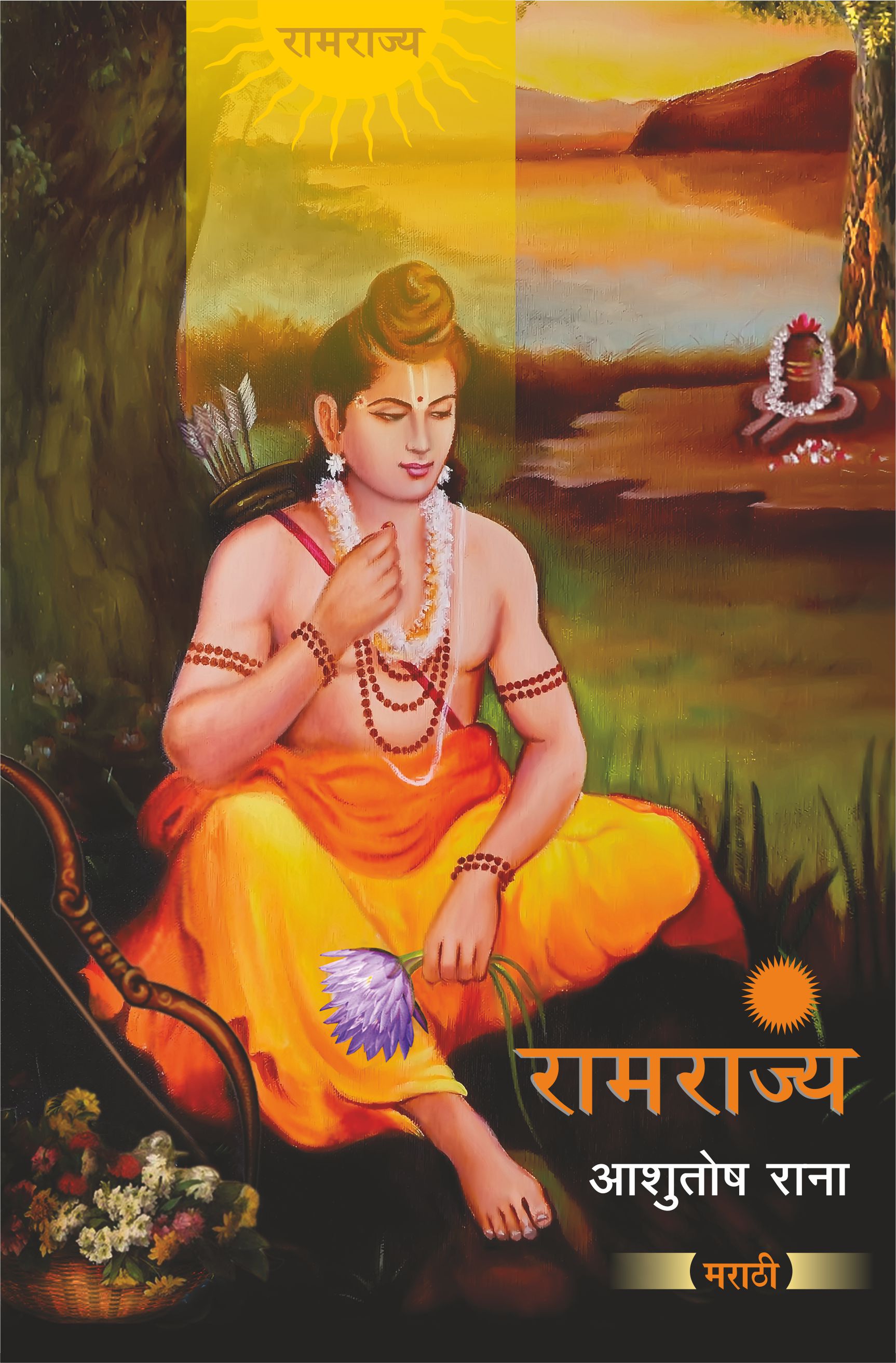
Ramrajya (Marathi)
Ashutosh Rana · Kautilya Books
The life story and narrative of Shri Rama not only bring joy to the heart but also raise many questions within the mind. In an era when the practice of polygamy was prevalent, Shri Rama took a solemn vow of monogamy—*Ekapatnivrata*—and upheld it through his thoughts, actions, and words. Moreover, *Maryada Purushottam* Shri Rama never even entertained an improper thought about another woman, not even in his dreams. From Jayanta (son of Indra) and Viradha to Khara, Dushana, and the conqueror of the three worlds, Ravana—Shri Rama punished and ended the lives of all those who attempted to insult Mother Sita. Sita was not merely Shri Rama’s beloved; she was the very breath of his life. What, then, could have transpired to cause Shri Rama to forsake Jagadamba Sita based on the words of a washerman from Ayodhya? Could *Maryada Purushottam* Shri Rama—who uplifted Ahalya, Shabari, Tara, and Mandodari—truly abandon Sita, his wife who embodied his resolve and strength of action, and who held his love, honor, glory, trust, and faith? What occurred—and why—to cause Mother Kaikeyi, who loved Shri Rama immensely and unconditionally and had instilled a sense of divinity for him in the heart of her own son Bharata, to demand a fourteen-year exile for Shri Rama—and that too, in the garb of an ascetic? Is it possible that Goddess Saraswati—the deity of wisdom and spiritual attainment, whose presence can transform the ignorant into the wise, the uncivilized into the cultured, and the mute into the eloquent—would transform Mother Kaikeyi’s sound judgment into perverse thinking? It is said that communion with the Divine makes the incomplete complete, transforms the ugly into the beautiful, and empowers the incapable; by the grace of the Divine, even a lame person can scale a mountain. How, then, could Shurpanakha’s nose and ears be severed—leaving her maimed—in the very presence of Shri Rama, the Supreme Being Himself? And all this simply because she expressed the desire that had arisen within her to the Divine? This happened despite the fact that a mere glance from the Divine is enough to transform the worldly desires of all creation into spiritual devotion. Furthermore, if Ravana had not received the boon of immortality, how could there be a reservoir of *Amrit* (nectar of immortality) in his navel? What was this reservoir of nectar that had to be drained before Shri Rama could finally slay Ravana?
Buy NowIndia's trusted online book store